

December 20, 2024
Improving nuclear security through reducing reliance on high activity radioactive sources: containerized x-rays to replace 60co and 137cs.
NATHAN MOSES-GONZALES
M3 Agriculture Technologies
Phoenix, USA
Email: [email protected]
JODI BETH LIEBERMAN
Sandia National Laboratories
Albuquerque, USA
MARION LE GALL
M3 Agriculture Technologies
Phoenix, USA
Abstract
Sterile Insect Technique programs operate across six continents and classically rely upon isotopic sources, such as 60Co and 137Cs. While these programs utilize radioactive technologies for the benefit of agriculture and human health, these programs also complicate the security landscape, with many gamma irradiators operating all over the world. Sandia National Laboratories and its research partners at Colville Confederated Tribes and M3 Agriculture Technology seek to reduce the risk of radioactive sources commonly used in Sterile Insect Technique by developing novel approaches using x-ray technology to replace existing isotopic sources. The project aims to make x-ray more adaptable to SIT programs that use high activity sources so that they are a strong alternative to radioactive source technology. The paper presents a pathway towards demonstrating X-ray technology as a viable upgrade to gamma irradiation for codling moth Cydia pomonella (L.) (CM), in modular insect rearing configurations, as well as discuss the impacts and benefits to the broader international community. This project aims to demonstrate a viable pathway for replacing existing Gamma irradiators with novel containerized X-ray units in Sterile Insect Technique.
1. INTRODUCTION
Sterile Insect Technique (SIT) is a species specific means of controlling targeted insect populations [1]. The concept of SIT evolved over two decades from the 1930’s through the 1950’s and was championed independently by A.S. Serebrovskii (USSR), F.L. Vanderplank (Tanzania), and E.F. Knipling (USA) as a means of controlling wild populations of insects [2]. The core foundation of this work emerged from Hermann Muller’s discovery that exposure to ionizing radiation could induce dominant lethal mutations in Drosophila melanogaster [3]. Muller’s work on X-ray mutagenesis earned him the Nobel Prize in Physiology or Medicine during 1946 [4] and provided a proof of principle that radiation could render insects infertile, and serve as a biological means of controlling insect pest populations. Muller worked with Serebrovskii to advance the genetic understanding of Drosophila. Serebrovskii proposed chromosomal translations could result in inherited sterility in pests [5]. Whereas Muller demonstrated radiation induced sterility and Serebrovskii developed chromosomal translations as a means to induce inherited sterility, Vanderplank independently theorized that hybrid sterility could be induced by crossing different genetic strains of Tsetse flies [6, 7]. Knipling and his research partner Raymond Bushland are often cited as the founders of modern, operational SIT programs. While their contributions to the operations and reach of SIT cannot be understated, their principal contributions to the field of SIT include incorporating population modeling, mass rearing and release of sterile insects, specifically the New World screwworm, (Cochliomyia hominivorax) [8] which provided the foundation for modern SIT programs. Knipling and Bushland were awarded the 1992 World Food Prize [9] for their contributions to food security through the development of SIT.
1.1 Ionizing radiation in SIT programs
The goal of SIT is to induce sterility without significantly impacting the insects’ ability to successfully compete with wild type insects for mating opportunities. Ionizing radiation causes damage to mitotic active cells (like stem and germ cells). In the context of SIT, it causes germ-cell chromosome fragmentation and the production of defective gametes for insects exposed to irradiation. The effects of irradiation can be observed at early or later stages of development depending on the structure of chromosomes. For instance, for dipterans (monokinetic chromosomes) the effects are observed in the zygotes and egg hatchability can be used to evaluate dose-response [10]. However for lepidopterans (holokinetic chromosomes), lethal mutations only become apparent later in the development and inherited sterility, where males and female offspring are more sterile than the irradiated parental generation, is commonly observed [11]. Sterilizing doses of radiation vary widely across insects and are influenced by factors such as the life stage of exposure for sterilization and the oxygen level during sterilization. Diptera, such as fruit flies and mosquitoes require, on average 85 Gy to achieve sterility, whereas Lepidoptera, such as codling moth (Cydia pomonella) and navel orangeworm (Amyelois transitella) require upwards of 300 Gy to induce sterility [12].
The suitability of a radiation type depends on Relative Biological Effectiveness (RBE), penetrability, availability, safety, and cost [12]. Practically this means that mass reared insects can be sterilized by using high-energy electrons, gamma radiation, and X-rays. Even though electrons can be used to sterilize insects, the size and cost of an electron beam facility render its use relatively rare [12]. Gamma radiation is the most commonly used radiation for SIT and relies on cobalt-60 (60Co) and caesium-137 (137Cs). 60Co and 137Cs were selected due to their long half-lives, reliability, and depth of penetration. Co-60 is produced by irradiating natural Co-59 in a reactor, while Cs-137 is a byproduct of nuclear fission of uranium and plutonium [12].
1.2 Regulatory challenges and operational risks
Access to isotopic sources is becoming increasingly odious from a regulatory perspective and cost prohibitive from an acquisition standpoint [13]. The transportation, handling, and disposal of these radioactive materials are governed by stringent regulations both domestically and internationally [13, 14]. Furthermore, operational risks related to accidental exposure to radiation, security concerns related to the storage and use of these materials and the environmental impact of radioactive waste make gamma irradiation increasingly less attractive.
In 2014, the Office of Radiological Security at the US Department of Energy/National Nuclear Security Administration launched the Cesium Irradiator Replacement Project with the goal of reducing the global reliance on high-activity radioactive sources such as 60Co and 137Cs. This initiative is part of a broader effort to enhance radiological security by encouraging users of high-activity radioactive sources to transition to safer, non-radioisotopic sources of energy [15]. The Cesium Irradiator Replacement Project incentivizes the voluntary replacement of high-activity radioactive sources with X-ray technology and permanent disposal of those sources at qualified sites. The program covers the cost of disposing of these machines [15]. This project has successfully replaced nearly 350 137Cs irradiators to date [16]. The Cesium Irradiator Replacement Project was bolstered by the John S. McCain National Defense Authorization Act for Fiscal Year 2019 [17], which set the target of replacing 137Cs blood irradiators by 2027.
The National Nuclear Security Administration’s Office of Radiological Security (ORS) works with Sandia National Laboratories to identify partners who share a common interest in reducing risks associated with high-activity radioactive sources. Sandia National Laboratories identified M3 Agriculture Technologies as a research collaborator and supported funds to explore how the evolution of X-ray technology creates the context to replace gamma with X-ray as the preferred method of inducing sterility in classical SIT programs. During 2024, ORS provided a $1million USD grant to M3 Agriculture Technologies to develop X-ray techniques for sterilizing CM. These funds seek to integrate X-ray technology into containerized modules that support the adoption of X-ray machines and the replacement of gamma irradiators. The project will look at the impacts of X-ray sterilization of CM, including assays to test the sterility and flight ability, and performance of x-ray sterilized CM.
1.3. X-ray as an alternative to gamma radiation
Classically, SIT programs rely upon gamma irradiators due to their high throughput and reliability. For example, the Gammacell 220 which uses 60Co, produces a dose rate ranging from 27.6 Gy/min [18] to 80 gy/min with a dose uniformity ratio (DUR) of 1.8 [19]. In contrast, self-contained X-Ray machines have a lower dose rate but a higher DUR, resulting in slower speeds but with the benefit of superior uniformity. For gamma irradiation, the dose rate depends on the activity of the source (60Co or 137Cs), the number of sources used, the distance from the source, and the shielding of the irradiation container. For X-rays, the dose rate mainly depends on the energy (kV), current (mA), and shielding of the container [20]. X-rays used for sterilization can be more penetrating than either gamma-rays [21] or electron beams [12]. Next generation X-ray machines are slated to reach comparable dose rates to 60Co which may render X-rays superior not only in safety, but also in performance.
X-ray machines come with several advantages when compared to high-activity radioactive sources. The superior precision of X-ray machines, specifically their ability to control the dose of radiation administered is advantageous to SIT as it enables operators to precisely control exposure and balance mating competitiveness with radiation induced sterility. These adaptable settings increase the flexibility of SIT programs by providing adjustable power settings and exposure times. In addition to the precision and flexibility of X-ray machines, the targeted application of X-rays may reduce the damage to nonreproductive tissues, which may reduce the impact of sterilization on mating competitiveness. X-ray machines reduce exposure risks to personnel within SIT facilities as X-ray machines only emit radiation when powered and activated. Additionally, the absence of high-energy radioactive materials further reduces risk of exposure and cost of transportation and disposal of these materials, further enhancing the safety of SIT programs. Finally, simplified regulatory compliance results in fewer hurdles to the implementation of SIT, especially as access to high-activity radioactive sources becomes increasingly difficult.
1.4. Benefits of a modular approach
The integration of X-ray machines into operational SIT programs requires a systems approach that encompasses not only the operational demands of the X-ray machine, but also the biological needs of mass-reared insects. Operationally, X-ray machines require precise power management, temperature control, and containment while insects’ biological demands include scale handling, torpor management for sterilization and minimizing handling points. Existing SIT programs are developed around the means of inducing sterility (ionizing radiation, gene editing, chemicals, or adjacently, bacterial infection) thus it is difficult to integrate new machines into existing workflows.
Programs both domestically and internationally have explored modular approaches to achieve scale in mass rearing, however, the combined use of automation, X-ray and modular rearing facilities is a novel approach. Modular production helps to facilitate low cost and rapid response deployment of SIT [22] while also providing an economically viable means of ramping production to meet demand [23]. X-ray Modules can adapt to existing facilities by either integrating into the cold collection system, or can store insects prior to sterilization. Modules can be designed to support both the operational requirements of the x-ray machines, as well as the biological demands of insects in containment. This evolution in technology affords the opportunity to revisit the workflow of mass rearing and SIT programs. By leveraging lower cost X-ray technology with distributed colonies, SIT can evolve from the centralized mass rearing model to a decentralized, modular system. Distributed colonies provide redundancy in the event of colony collapse, may improve performance by reducing distance traveled prior to release and support programs by providing a means to move production to new areas in programs taking a multiphase approach.
2. MODULAR SIT FOR CODLING MOTH MANAGEMENT
Agricultural insect pests, including moth species that fall under the order Lepidoptera cause significant damage [1], and are among the most injurious pests to cropping systems worldwide [24]. If left unchecked, lepidopterans present a risk to international food and biosecurity [25]. To combat this threat, several programs have developed area-wide integrated pest management (AW-IPM) efforts to either suppress, contain, prevent or eradicate targeted insect species using the Sterile Insect Technique (SIT) [26]. CM is a key pest of apples worldwide. In the United States and Canada, CM has driven apple pest management programs for over a century and given the favorable climate of eastern Washington for reproduction of this pest, it is likely to continue in this role. X-ray technology was first used to sterilize New World screwworm (C. hominivorax) in 1953 [27], and as discussed previously, is recommended as an alternative to gamma irradiation [28, 29]. X-ray sterilization, alongside modular rearing, could provide apple growers with a safe and efficient control program against CM. While fruit fly and mosquito control [30] programs already deploy X-rays SIT programs, this would be the first of its kind used for lepidopterans in the United States.
2.1 The peculiar case of lepidopterans
SIT has proven to be extremely successful to control major pests and vectors, particularly dipteran pests, like the new world screwworm [31], fruit flies [32–36], or tse tse flies [37, 38]. Lepidopterans, on the other hand, have proven challenging, mainly because of their resistance to ionization radiation. The holokinetic structure of lepidopteran chromosomes (i.e. chromosomes without a centromere), makes them less prone to producing unstable fragments than typical momocentric chromosomes [11]. For instance, lepidopterans cells are 50-100 times more resistant to radiation-induced death than cultured mammalian cells, while dipterans cells are only 3-9 times more resistant [39, 40]. Another important feature of lepidopterans is a sex-based variation in resistance to radiation linked to germ cell development. In other words, females are much more sensitive to radiation than males because their germ cells are still in meiosis when radiation typically happens (pupal or adult stage) while male sperm is already mature [11]. Finally, lepidopterans species treated with sub-sterilizing doses are only partly sterile but their F1 offspring exhibit a higher level of sterility than their irradiated parents. These effects can be seen for several generations [41]. This inherited sterility (IS) can be a great asset for pest control programs because it lowers the doses of radiation needed and therefore increases the competitiveness of the insects released. Furthermore it is compatible with other pest strategies like insect pathogens, pheromones, and parasitoids [11]. On the other hand, unlike SIT, IS may not receive the support of growers who can be reticent to the idea of releasing partially fertile pests in their crops.
Thus far, several moth species have been successfully controlled using SIT programs. In South Africa, sterile false codling moths (Thaumatotibia leucotreta) were released in citrus orchards starting in 2007, eventually leading to a successful reduction in the percentage of infested fruit per tree. The program is currently owned by the Citrus Grower Association (CGA) [42]. In the USA and Northern Mexico, sterile moths of the pink bollworm (Pectinophora gossypiella) have been released for 20 years to protect cotton fields. In 2018, the US Secretary of Agriculture officially declared the pink bollworm eradicated from the United States [43]. The cactus moth (Cactoblastis cactorum), a pest of Opuntia in Mexico, has been eradicated from two islands (Isla Mujeres and Isla Contoy) in 2009 [44]. The Australian painted apple moth (Teia anartoides) has been eradicated from New Zealand in 2006 [45]. Lastly the Okanagan Kootenay Sterile Insect Release (OKSIR) program is the longest running (1994 – present), most successful, area-wide integrated pest program for the suppression of CM in the world [46]. Importantly all these programs worked by using a combination of tactics, often the SIT component is most useful once the pest population is brought down by other methods (e.g. surveillance, sanitation, mating disruption, pesticides, etc.).
Thus far, few studies have explored the use of X-ray for inducing sterility in Lepidoptera. In the laboratory, larvae of the navel orangeworm (A. transitella) (NOW), a pest of tree nuts, appear unsuitable for ionizing irradiation (gamma or X-ray) because of high mortality. Nevertheless, the study showed that gamma and X-ray irradiation were biologically equivalent at equal doses [47]. On the other hand, adult male sterility can be induced at relatively low dose (125 Gy). Inherited sterility was reported for F1 and F2 of both sexes [48]. This proof of principle demonstrated the ability to sterilize NOW using X-ray. However, the small scale of the study (three males per cohort), highlights that further research on high throughput sterility is required. For CM, three radiation doses have been tested (183, 366, 549 Gy) on pupae. Females were substeriles at 183 Gy and fully steriles at 366 Gy or higher [49]. However, at 366 Gy, irradiation significantly shortened the lifespan of males, and reduced their mating competitiveness in the field in Northeast China [50]. This reduction in competitiveness was mostly attributed to a decline in their ability to fly [51]. These results highlight the urgent need for research in this promising area, particularly regarding timing of irradiation, mass rearing and production, and dosimetry. Despite encouraging data in the laboratory, there are currently no area-wide demonstrations of X-ray SIT in the United States for lepidopterans and much more work is still required.
2.2 Codling moth current SIT program
The Osoyoos Kootenay Sterile Insect Release (OKSIR) program (British Columbia, Canada) mass-rears CM in a centralized location and uses 60Co to sterilize moths prior to release into orchards in Canada [52], The United States, and New Zealand [53]. The program was launched in 1992 as an eradication program and transitioned to a suppression program in 1997 [54]. OKSIR officially began releasing mass reared insects in 1994 after three decades of research on the viability of SIT to suppress wild CM populations in orchards [55–57] alongside the refinement of the technique into the OKSIR mass rearing system [58] and the development of Integrated Pest Management strategies [2] that combined SIT into management programs. OKSIR continues to rear, sterilize and release high quality moths and, after decades of use in British Columbia, CM SIR is considered a proven technique.
Apple is one of Washington State’s premier crops with approximately 70,000 ha under production. While most of this acreage is managed using conventional production practices, organic production is a substantial and important market sector, comprising 12,312 ha of apple production [59]. Mating disruption is considered a foundation of CM management [60] and is used on roughly 90% of apple acres in Washington [61]. However, both organic and conventional management regimes still suffer from occasional ‘hotspots’ of infestation, and CM remains the most dangerous direct pest of apples in Washington State. The increasing frequency of a third generation has stretched insecticide resources, which previously were required only to prevent damage from two generations. While there are modes of action for CM control, there is an ever-present danger of insecticide resistance, and non-target effects on natural enemies. A non-insecticidal supplement to control CM would be a welcome alternative in Washington State, and would increase the long-term stability and sustainability of both conventional and organic apple systems.
The United States Department of Agriculture, Agricultural Research Service tested sterile CM release in Washington state during the mid 1990s [62]. The Codling Moth Areawide Management Project (CAMP) featured field sites across Washington and Oregon, including the Lake Osoyoos CAMP orchards, which received sterile CM releases, in addition to mating disruption. The study found that season long releases of partially sterilized CM resulted in a reduction in fruit damage, and population suppression. This study demonstrated the compatibility of mating disruption with SIT and elevated two environmentally friendly tools to the forefront of IPM. Despite the demonstrated success of both mating disruption and SIT, Washington state moved forward with mating disruption, while Canada continued to deploy SIT as their foundational tool for suppressing CM.
Colville Confederated Tribes (CCT) represents 12 Native American Tribes and encompasses approximately 566,560 ha of forests, waterways, and sagebrush [63]. These lands are vital to the cultural, social, and economic fabric of CCT. CCT is committed to protecting the natural resources and environment within and surrounding tribal lands. CCT is adjacent to roughly 70,000 ha of Washington’s apple production. The Washington apple industry brings nearly $2.19 billion USD to Washington State annually [64] and growers are increasingly shifting production towards sustainable practices, including the use of SIT. The use of SIT reduced pesticide use in apples for CM by 96% in British Columbia, CA [11]. Reduced pesticide use not only results in healthier environments for beneficial insects and pollinators [65], but also improves soil health by enhancing microbial diversity. Over the past six years, the use of SIT in Washington State to manage CM has increased from 56 acres during 2018 to greater 4,500 acres during 2024 and is in use on roughly 10% of organic apple acres in the state. CCT recognizes the positive environmental impacts of X-ray sterility in CM management and supports the expansion of this technology in Washington state as an environmentally friendly approach to manage insect pests. The expansion of this technology is limited by a lack of insect mass rearing capacity and the development of X-ray SIT presents an opportunity to demonstrate the use of X-ray to replace gamma irradiation in operational SIT programs.
2.3 Containerization for codling moth SIT
Sterile Insect Release (SIR) is widely viewed as a tool within IPM programs that can complement other tactics such as mating disruption, biological control, and insecticides. SIR in Washington State offers an alternative that could transform the management of CM. The approach entails sterilization of reared insects that are subsequently released in large numbers to compete with wild males for mating with wild females, thereby greatly reducing fertile mating and consequently the production of offspring. The primary stumbling block to implementing SIR programs is the startup cost of the moth rearing and sterilization facility [66]. The OKSIR facility, for example, cost $7.7 million in 1992 canadian dollars (roughly $6 mil USD) to build [67], which is equivalent to $14.5 million Canadian dollars (roughly $13 mil USD) in 2024. In contrast, the cost to build an X-ray SIT module in 2024 is less than $200,000 USD per module with three modules (X-ray module, eclosion module, rearing module), equipment and infrastructure anticipated to cost approximately $1 million USD. The tree modules set up could produce between 1-2 million sterile CM per week. 500 ha treated weekly with 2,000 sterile moths/ha [52] is an ideal starting point for a pilot project [67] to test the efficacy of SIT without having to incur a large startup cost of a full sized facility.
Modular configurations of mass rearing facilities can be centralized or can be used in a decentralized manner to distribute production across multiple locations. Furthermore, modules can be added on to expand rearing capacity, deactivated to reduce capacity, or shifted to support other insects if necessary [68]. For centralized, mass rearing facilities, expansion is not feasible without modules and reducing production may compromise the economics of the centralized mass rearing facility to the point where operations are not viable. Modular facilities are better suited for pilot, voluntary and unsubsidized SIT programs, are cheaper to operate than mass rearing facilities and support the changing composition of agricultural production.
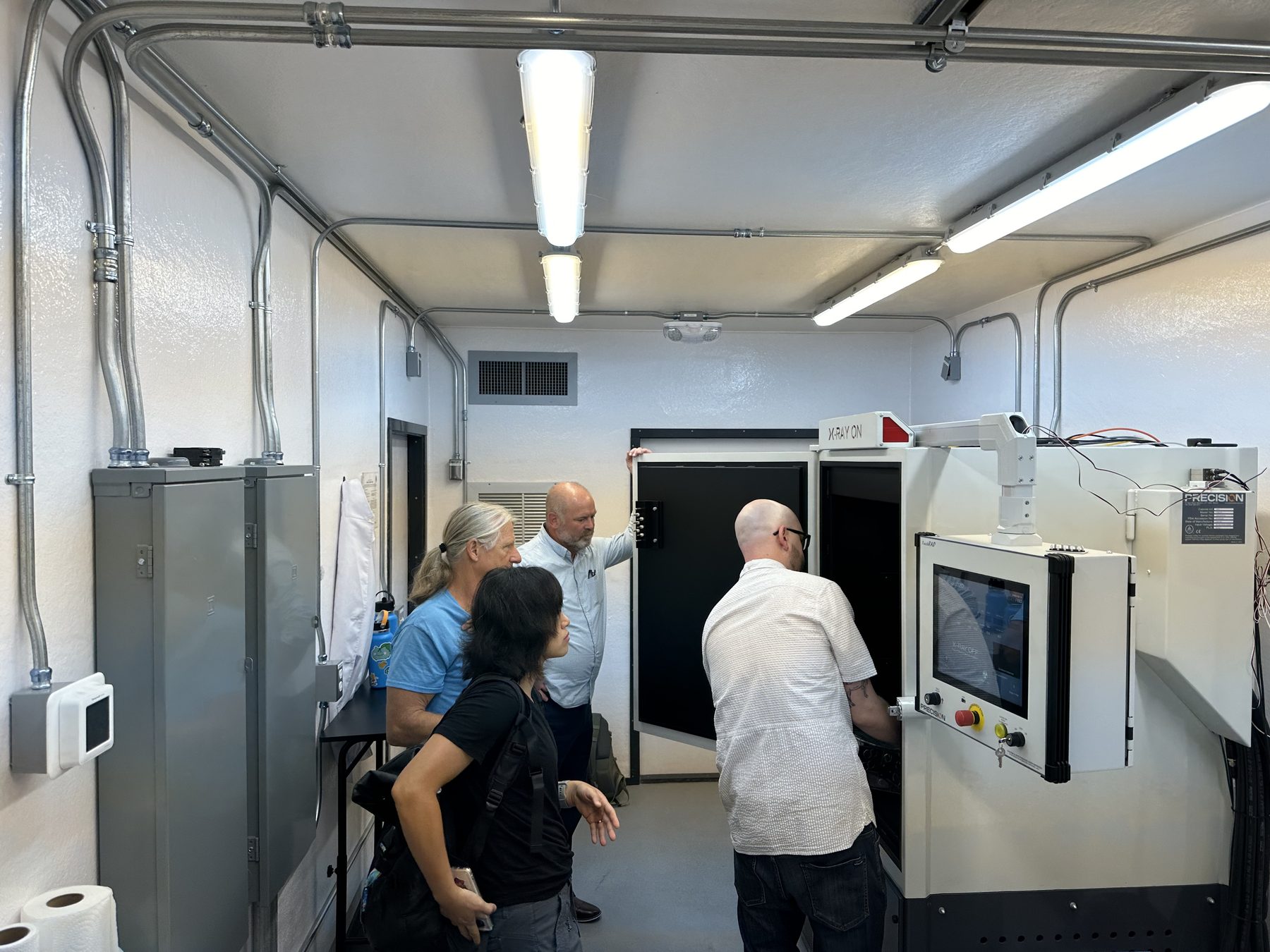
Mass rearing systems divide into three primary categories: production, processing, and handling. Production encompasses the inputs of mass rearing, i.e. diet and equipment. Process focuses on the measurements related to rearing, such as emergence, collection, and irradiation. Handling focuses on torpor, mechanical damage, and field release. M3 Agriculture Technologies developed a 3m X 3m X 12m X-ray module that contains several x-ray machines and a cold collection system. The X-ray Module supports the processing of emerged moths by containing them in the cold room and treating them with X-rays to induce sterility. The X-ray Module is intended to support existing mass rearing facilities, as well as nascent modular facilities, by either replacing existing cold storage in Mass rearing facilities, or by serving as a centralized sterilization point for a multitude of modules. Beyond the X-ray Module, two other modules that have the same 3m X 3m X 12m footprint are under development. These two modules will support the production, or rearing of insects within SIT systems. The combination of production and processing modules augments existing insect production capacity by providing decentralized colonies while distributing insect processing to modules and insect handling to release teams. Finally, the insect release teams will use drone methods [34, 52] developed for sterile insect release which covers the handling process within the broader mass rearing system. The X-ray Module is the first step in this three phase process and demonstrates a system of sterility with X-ray at its core to support lepidoptera SIT programs in their efforts to transition away from high-activity radioactive sources.
The development of modular production processes for lepidoptera SIT that focus on X-ray sterility provide nascent and existing lepidoptera SIT programs with a roadmap that show potential for scalability, flexibility, and economic viability for management of insect pests. Modular SIT not only facilitates rapid response to pest incursions, but also aligns with broader aims of Integrated Pest Management by offering an environmentally friendly tool that can enhance the sustainability of agroecosystems.
3. FUTURE CHALLENGES AND DIRECTIONS FOR SIT
The principles established by Muller and advanced upon by Serebrovskii, Vanderplank and Knipling laid the foundation for modern SIT programs. The evolution of SIT from its theoretical foundations to its operational success, which includes the notable elimination of invasive insect pests such as the New World screwworm fly and pink bollworm (P. gossypiella) [69], underscores the impact of this technology in agriculture. 20th century SIT programs benefited greatly from the application of 60Co and 137Cs, while 21st century SIT programs will find their success in the application of X-rays and other alternative sources to60Co and 137Cs. The shift towards X-ray sterilization as an alternative to gamma irradiation is timely, as the regulatory environment, concerns around nuclear security, in addition to increased acquisition and disposal costs present barriers to the adoption of SIT.
Following World War II, Knipling wrote to Muller and described his theory of mass reared and release of genetically defective flies to suppress and overtime eradicate populations of New World screwworms. Muller responded positively to this idea. In 1953, New World screwworm flies were exposed to X-rays at a Texas hospital and demonstrated sexual sterility. By the end of the 1950’s, SIT demonstrated the potential to eliminate insect pests from geographical regions and by 1959, New World screwworm flies were eliminated from the southeastern United States. SIT has come full circle, from the proof of principles using X-ray to 20th century operational programs deploying gamma and back once more to practitioners looking to X-rays to induce sterility today.
Agriculture is at an inflection point where regulations alongside increasing public awareness are making it difficult for producers to rely upon chemical control for managing insect pests. Furthermore, resistance to existing chemistries and a lack of new products coming to market places specialty crop production in a precarious situation. As a result, industries are looking at developing next generation SIT programs for insects pest such as navel orangeworm, box tree moth (Cydalima perspectalis), diamondback moth (Plutella xylostella) and spotted wing drosophila (Drosophila suzukii) to name a few. Deploying a module that integrates X-rays into the cold containment and sterilization process is the first step in demonstrating a viable pathway for replacing high-activity radioactive sources, such as 60Co and 137Cs in SIT programs.
4. REFERENCES
[1] KLASSEN, W., VREYSEN, M.J.B., “Area-wide integrated pest management and the sterile insect technique”, Sterile Insect Technique, CRC Press (2021) 75–112.
[2] DYCK, V.A., HENDRICHS, J., ROBINSON, A.S., Sterile Insect Technique: Principles and Practice in Area-Wide Integrated Pest Management, Taylor & Francis (2021).
[3] MULLER, H.J., Induced Mutations in Drosophila, Cold Spring Harbor Symposia on Quantitative Biology, Vol. 9, Citeseer (1941) 151–167.
[4] The Nobel Prize in Physiology or Medicine 1946, NobelPrize.org, https://www.nobelprize.org/prizes/medicine/1946/summary/.
[5] SEREBROVSKII, A.S., Genes scute and achaete in Drosophila melanogaster and a hypothesis of gene divergency., (1938).
[6] VANDERPLANK, F.L., Hybridization between Glossina species and suggested new method for control of certain species of tsetse, Nature 154 3915 (1944) 607.
[7] VANDERPLANK, F.L., Experiments in the hybridisation of tsetse-flies (Glossina, Diptera) and the possibility of a new method of control., Transactions of the Royal Entomological Society of London 98 pt. 1 (1947).
[8] BUSHLAND, R.C., LINDQUIST, A.W., KNIPLING, E.F., Eradication of Screw-Worms through Release of Sterilized Males, Science 122 3163 (1955) 287.
[9] The World Food Prize, (1992).
[10] ROBINSON, A.S., “Genetic basis of the sterile insect technique”, Sterile Insect Technique, CRC Press (2021) 143–162.
[11] MAREC, F., VREYSEN, M.J., Advances and challenges of using the sterile insect technique for the management of pest Lepidoptera, Insects 10 11 (2019) 371.
[12] BAKRI, A. et al., Sterilizing insects with ionizing radiation, Sterile Insect Technique: Principles and Practice in Area-Wide Integrated Pest Management, (2021) 355.
[13] YAMADA, H., ZHANG, D., PARKER, A.G., VREYSEN, M.J.B., Sterilizing insects with X rays or gamma rays – which irradiator to select?, Frontiers in Tropical Diseases 4 (2023).
[14] ASHRAF, M.A., AKIB, S., MAAH, Mohd.J., YUSOFF, I., BALKHAIR, K.S., Cesium-137: Radio-Chemistry, Fate, and Transport, Remediation, and Future Concerns, Critical Reviews in Environmental Science and Technology 44 15 (2014) 1740.
[15] ITAMURA, M.T., BAUMANN, M.J., GILBERT, L.J., RADIOLOGICAL SECURITY THROUGH CESIUM IRRADIATOR REPLACEMENT IN THE UNITED STATES., Sandia National Lab.(SNL-NM), Albuquerque, NM (United States) (2018).
[16] Office of Radiological Security (ORS), Energy.gov, https://www.energy.gov/nnsa/office-radiological-security-ors.
[17] REP. THORNBERRY, M. [R-T.-13, H.R.5515 – 115th Congress (2017-2018): John S. McCain National Defense Authorization Act for Fiscal Year 2019, https://www.congress.gov/bill/115th-congress/house-bill/5515.
[18] TUR, C. et al., Sterile insect technique in an integrated vector management program against tiger mosquito Aedes albopictus in the Valencia region (Spain): operating procedures and quality control parameters, Insects 12 3 (2021) 272.
[19] YAMADA, H. et al., Identification of critical factors that significantly affect the dose-response in mosquitoes irradiated as pupae, Parasites Vectors 12 1 (2019) 435.
[20] FOOD AND AGRICULTURE ORGANIZATION OF THE UNITED NATIONS, INTERNATIONAL ATOMIC ENERGY AGENCY, Guidelines for Mass Rearing and Irradiation of Drosophila suzukii for Sterile Insect Technique Application, (2022).
[21] CLELAND, M.R., PAGEAU, G.M., Comparisons of X-ray and gamma-ray sources for industrial irradiation processes, Nuclear Instruments and Methods in Physics Research Section B: Beam Interactions with Materials and Atoms 24–25 (1987) 967.
[22] TWEEN, G., Modular Approach to Fruit Fly Production Facilities for the Mediterranean Fruit Fly Central American Program, Fruit Flies: Proceedings of the Second International Symposium, 16-21 September 1986, Colymbari, Crete, Greece/Edited by AP Economopoulos, Athens: Symposium Organizing Committee, Elsevier Science Publ. Co … (1987).
[23] WHITTEN, M., MAHON, R., “Misconceptions and Constraints Driving Opportunities”, Sterile Insect Technique, CRC Press (2021) 45–74.
[24] VREYSEN, M.J., KLASSEN, W., CARPENTER, J.E., Overview of technological advances toward greater efficiency and efficacy in sterile insect-inherited sterility programs against moth pests, Florida Entomologist 99 sp1 (2016) 1.
[25] Improved Field Performance of Sterile Male Lepidoptera to Ensure Success in SIT Programmes, https://www.iaea.org/projects/crp/d41026.
[26] HENDRICHS, J., VREYSEN, M.J.B., ENKERLIN, W.R., CAYOL, J.P., “Strategic options in using sterile insects for area-wide integrated pest management”, Sterile Insect Technique, CRC Press (2021) 841–884.
[27] BUSHLAND, B.C., HOPKINS, D.E., Sterilization of Screw-worm Flies with X-rays and Gamma-rays., Journal of Economic Entomology 46 4 (1953).
[28] MASTRANGELO, T. et al., A New Generation of X Ray Irradiators for Insect Sterilization, Journal of Economic Entomology 103 1 (2010) 85.
[29] IAEA, Developing alternatives to gamma irradiation for the Sterile Insect Technique, Nuclear Technology Review 2012 (2012) 81.
[30] FOLEY, E.W., MORREALE, R.L., HOEL, D.F., LLOYD, A.M., “Area-wide mosquito management in Lee County, Florida, USA”, Area-Wide Integrated Pest Management, CRC Press (2021) 319–338.
[31] MASTRANGELO, T., WELCH, J.B., An overview of the components of AW-IPM campaigns against the New World screwworm, Insects 3 4 (2012) 930.
[32] DOMINIAK, B.C., MCLEOD, L.J., LANDON, R., NICOL, H.I., Development of a low-cost pupal release strategy for Sterile Insect Technique (SIT) with Queensland fruit fly and assessment of climatic constraints for SIT in rural New South Wales, Australian Journal of Experimental Agriculture 40 7 (2000) 1021.
[33] HENDRICHS, J., FRANZ, G., RENDON, P., Increased effectiveness and applicability of the sterile insect technique through male‐only releases for control of Mediterranean fruit flies during fruiting seasons, J Applied Entomology 119 1–5 (1995) 371.
[34] MOSES-GONZALES, N. et al., The use of multiple unmanned aircraft systems as a swarm to release sterile Mexican fruit fly (Diptera: Tephritidae) into south Texas citrus groves, Journal of Economic Entomology 114 5 (2021) 1857.
[35] PEREIRA, R. et al., Improving sterile male performance in support of programmes integrating the sterile insect technique against fruit flies, J Applied Entomology 137 s1 (2013) 178.
[36] REYNOLDS, O.L., DOMINIAK, B.C., ORCHARD, B.A., Pupal release of the Queensland fruit fly, Bactrocera tryoni (Froggatt) (Diptera: Tephritidae), in the sterile insect technique: seasonal variation in eclosion and flight, Australian Journal of Entomology 49 2 (2010) 150.
[37] VREYSEN, M.J. et al., Sterile insects to enhance agricultural development: the case of sustainable tsetse eradication on Unguja Island, Zanzibar, using an area-wide integrated pest management approach, PLoS Neglected Tropical Diseases 8 5 (2014) e2857.
[38] ABD-ALLA, A.M. et al., Improving sterile insect technique (SIT) for tsetse flies through research on their symbionts and pathogens, Journal of invertebrate pathology 112 (2013) S2.
[39] CHANDNA, S. et al., Radiation responses of Sf9, a highly radioresistant lepidopteran insect cell line, International Journal of Radiation Biology 80 4 (2004) 301.
[40] Moths: Myths and mysteries of stress resistance – Koval – 1996 – BioEssays – Wiley Online Library, https://onlinelibrary.wiley.com/doi/abs/10.1002/bies.950180211.
[41] CARPENT ER, J.E., BLOEM, S., MAREC, F., “Inherited Sterility in Insects”, Sterile Insect Technique (DYCK, V.A., HENDRICHS, J., ROBINSON, A.S., Eds), Springer Netherlands, Dordrecht (2005) 115–146.
[42] BOERSMA, N., “The suppression of the false codling moth in South Africa using an AW-IPM approach with a SIT component”, Area-Wide Integrated Pest Management, CRC Press (2021) 93–109.
[43] USDA Announces Pink Bollworm Eradication Significantly Saving Cotton Farmers in Yearly Control Costs | USDA, https://www.usda.gov/media/press-releases/2018/10/19/usda-announces-pink-bollworm-eradication-significantly-saving.
[44] BELLO-RIVERA, A. et al., Successful area-wide programme that eradicated outbreaks of the invasive cactus moth in Mexico, Area-wide integrated pest management. Development and field application. CRC Press, Boca Raton, FL, USA (2021) 561.
[45] SUCKLING, D.M. et al., Performance of Irradiated Teia anartoides (Lepidoptera: Lymantriidae) in Urban Auckland, New Zealand, Journal of Economic Entomology 98 5 (2005) 1531.
[46] OKSIR The Sterile Insect Release (SIR) Program is an area wide environmentally friendly approach to managing the codling moth population in the Okanagan, Similkameen and Shuswap Valleys, https://www.oksir.org/.
[47] HAFF, R. et al., X-ray-based irradiation of larvae and pupae of the navel orangeworm (Lepidoptera: Pyralidae), Journal of Economic Entomology 113 4 (2020) 1685.
[48] LIGHT, D.M., OVCHINNIKOVA, I., JACKSON, E.S., HAFF, R.P., Effects of x-ray irradiation on male navel orangeworm moths (Lepidoptera: Pyralidae) on mating, fecundity, fertility, and inherited sterility, Journal of economic entomology 108 5 (2015) 2200.
[49] ZHANG, J.-H. et al., Sterility of Cydia pomonella by X ray irradiation as an alternative to gamma radiation for the sterile insect technique, Bulletin of Entomological Research 113 1 (2023) 72.
[50] ZHANG, J. et al., The Effect of X-ray Irradiation on the Fitness and Field Adaptability of the Codling Moth: An Orchard Study in Northeast China, Insects 14 7 (2023) 615.
[51] HUANG, S. et al., Side effects of X‐ray irradiation on flight ability of Cydia pomonella moth, Pest Management Science (2023) ps.7924.
[52] ESCH, E.D. et al., Operational parameters for the aerial release of sterile codling moths using an uncrewed aircraft system, Insects 12 2 (2021) 159.
[53] HORNER, R.M., LO, P.L., ROGERS, D.J., WALKER, J.T., SUCKLING, D.M., Combined effects of mating disruption, insecticides, and the Sterile Insect Technique on Cydia pomonella in New Zealand, Insects 11 12 (2020) 837.
[54] NELSON, C. et al., “Putting the sterile insect technique into the modern integrated pest management toolbox to control the codling moth in Canada”, Area-Wide Integrated Pest Management, CRC Press (2021) 111–127.
[55] PROVERBS, M.D., The sterile male technique and its possible use for codling moth eradication, The Canadian Entomologist 96 1–2 (1964) 143.
[56] PROVERBS, M.D., NEWTON, J.R., LOGAN, D.M., Codling moth control by the sterility method in twenty-one British Columbia orchards, Journal of Economic Entomology 70 5 (1977) 667.
[57] PROVERBS, M.D., Sterile insect technique in codling moth control, (1982).
[58] BLOEM, S., BLOEM, K.A., KNIGHT, A.L., Assessing the Quality of Mass-Reared Codling Moths (Lepidoptera: Tortricidae) by Using Field Release-Recapture Tests, Journal of Economic Entomology 91 5 (1998) 1122.
[59] GALLARDO, R.K., PEDROSO-GALINATO, S., 2022 cost estimates of producing and packing organic Honeycrisp apples in Washington, (2023).
[60] Codling Moth Mating Disruption Considerations | WSU Tree Fruit | Washington State University.
[61] Codling Moth Biology and Ecology | WSU Tree Fruit | Washington State University.
[62] CALKINS, C.O., KNIGHT, A.L., RICHARDSON, G., BLOEM, K.A., Area-Wide Population Suppression of Codling Moth, Penerbit Universiti Sains Malaysia, Malaysia (2000).
[63] Colville Tribes, Colville Tribes, https://www.colvilletribes.com.
[64] Noncitrus Fruits and Nuts 2021 Summary 05/04/2022, (2021).
[65] PECENKA, J.R., INGWELL, L.L., FOSTER, R.E., KRUPKE, C.H., KAPLAN, I., IPM reduces insecticide applications by 95% while maintaining or enhancing crop yields through wild pollinator conservation, Proc. Natl. Acad. Sci. U.S.A. 118 44 (2021) e2108429118.
[66] WHITTEN, M., MAHON, R., Misconceptions and constraints driving opportunities, Sterile Insect 45 (2021).
[67] BLOEM, K.A., BLOEM, S., ALINIAZEE, M.T., LONG, L.E., Codling moth eradication program in British Columbia: a review and update, Biology and control of cherry fruit flies: a worldwide perspective. Special Report 971 (1996) 101.
[68] PARKER, A.G., MAMAI, W., MAIGA, H., “Mass-rearing for the sterile insect technique”, Sterile Insect Technique, CRC Press (2021) 283–316.
[69] STATEN, R.T., WALTERS, M.L., “Technology used by field managers for pink bollworm eradication with its successful outcome in the United States and Mexico”, Area-Wide Integrated Pest Management, CRC Press (2021) 51–92.